Roof repair problems typical of the Front Range
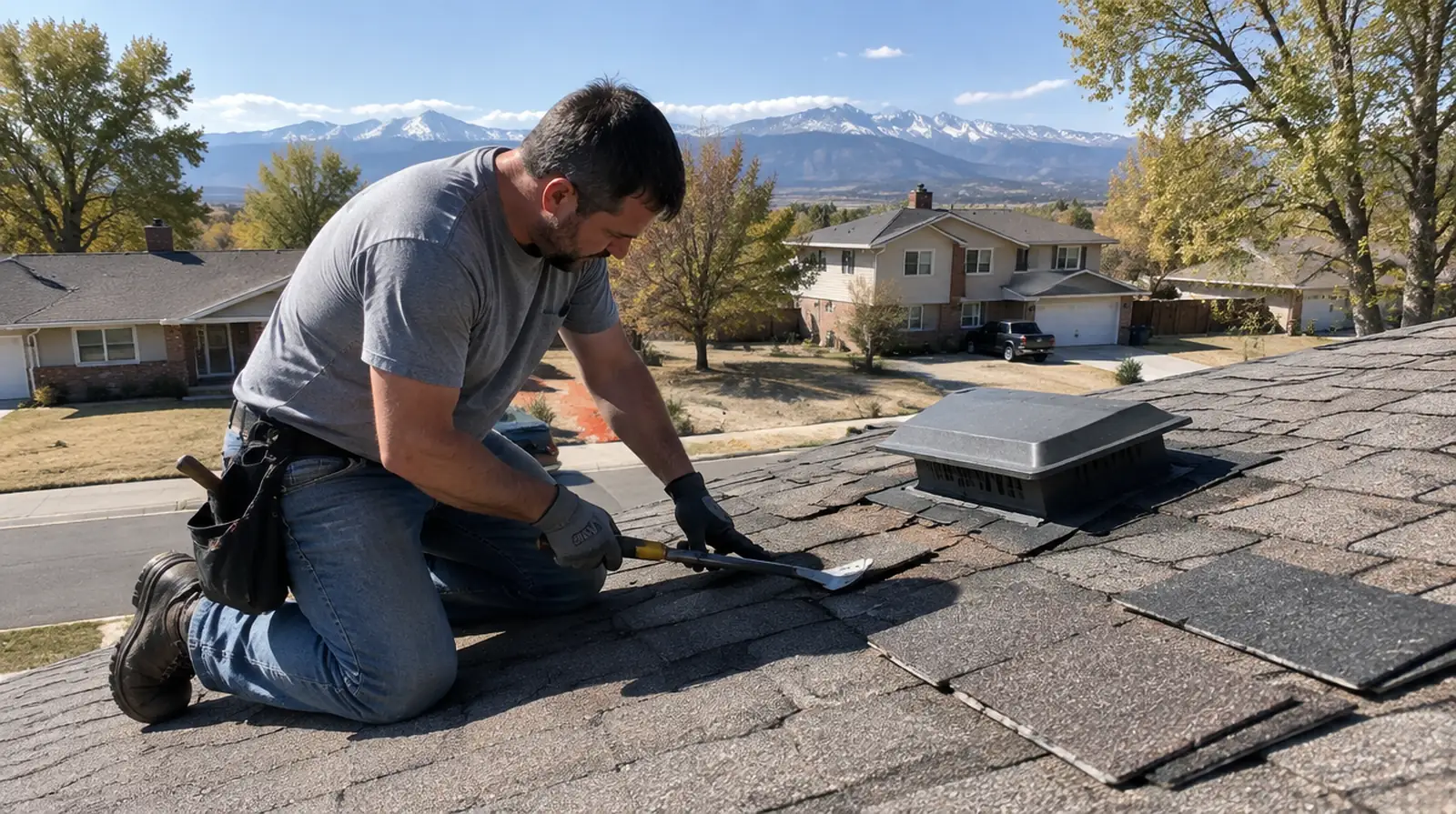
Most repair calls here trace back to weather. Hail leaves round bruises and cracks where granules have been knocked off, exposing the asphalt to the sun. Strong west winds lift shingle edges along the rakes and ridges, breaking the seal strip and sometimes tearing whole pieces away. Plastic and metal roof vents crack or dent, and the rubber collars around plumbing pipes split after years of intense sunlight.
On older homes south of 72nd, chimney flashing and wall flashing are common failure points. Many of these houses have been reroofed over the original shingles, so a repair may mean working through two layers. On newer two-story homes, the transitions where a lower roof meets a wall, often over a garage or porch, see repeated stress from snowmelt and driven rain.
Our roof repair process
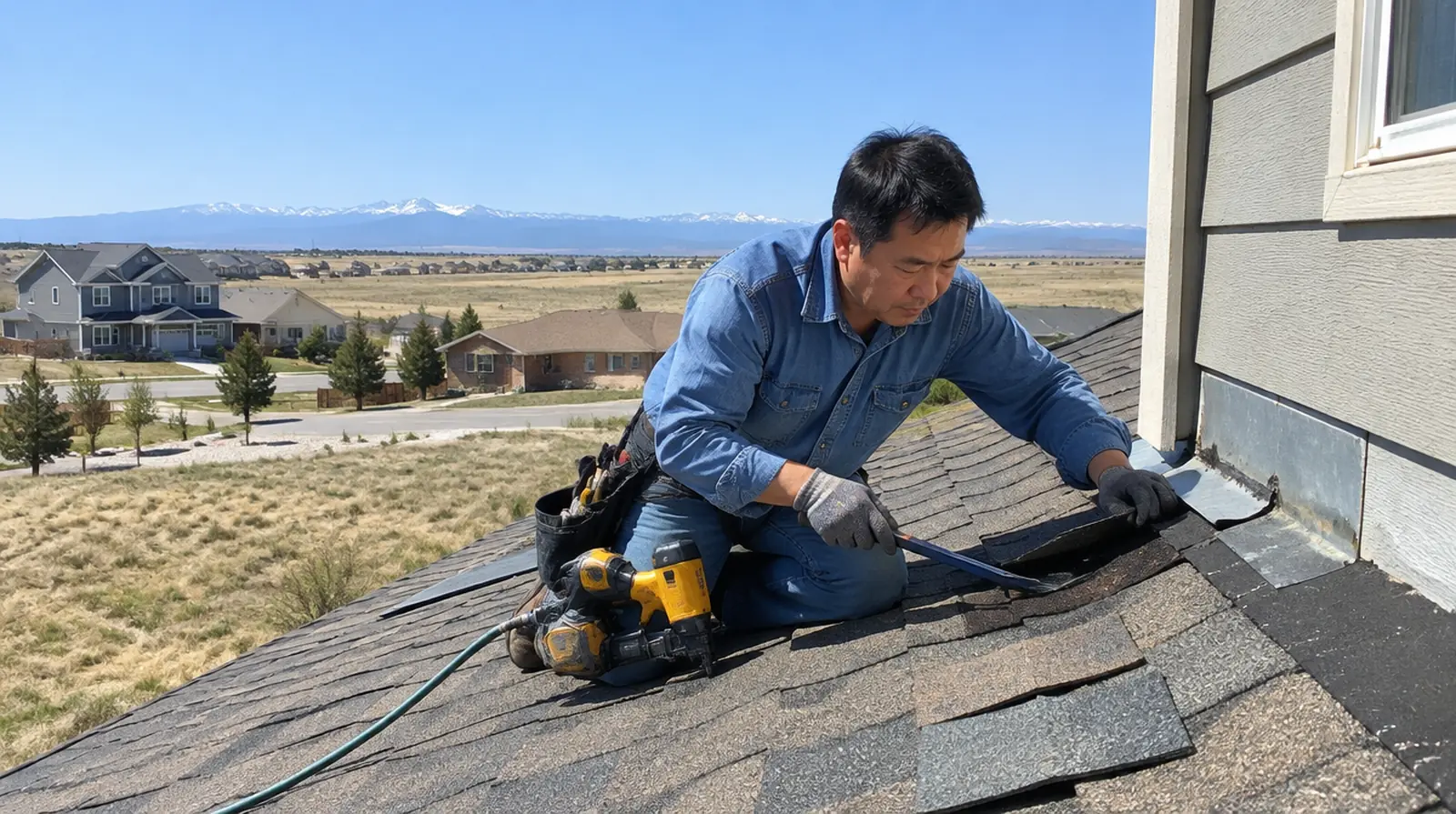
We start with a conversation about what you have noticed: missing pieces in the yard, a leak during a storm, or just a feeling after a hail event that something is not right. Then we get on the roof, photograph the damage and check the surrounding area, because storms rarely damage only one spot.
Damaged shingles are removed carefully so the courses above are not torn, and new ones are slipped into place, nailed and sealed. Broken vents and collars are swapped for new parts. Flashing is reset or replaced with new metal. If the deck under a damaged area is soft or cracked, we replace that section before covering it. When we are done you get before-and-after photos and notes on anything else we spotted.
Why small roof damage grows fast here
Strong sun and dry air keep working on any spot where granules are gone. A small hail crack lets moisture into the mat, and freezing nights expand it. Wind catches a lifted edge and peels it farther each time. The next heavy, wet spring snow then melts straight into those openings. A few hundred dollars of repair can turn into decking and drywall work if it waits a season.
What affects roof repair costs
- Amount of damage. A handful of shingles is quick; a full slope of hail hits is a bigger job.
- Parts involved. Vents, collars and flashing add materials and time.
- Deck condition. Soft or cracked sheathing has to be replaced.
- Roof height and pitch. Steep or tall roofs need extra safety setup.
- Shingle matching. Older or discontinued colors may need careful blending.
Is a repair enough, or is it time to replace?
If the damage is limited to a few areas and the rest of the roof is in decent shape, repair is the sensible choice. If hail has bruised every slope, the shingles are brittle from sun exposure, or there are already two layers, a full roof replacement is often the better use of money, and after a major storm insurance may cover much of it. If water is already reaching inside, our dedicated leak repair service focuses on tracing the source before anything is patched.
Repairs after hail and insurance claims
After hail, we can inspect the roof and document what we find with photos and measurements. That gives you something solid to share with your insurance company. If the carrier approves a repair or replacement, we work from that scope. If the damage is minor and below your deductible, we can still make the repair and keep the roof watertight.
Roof repair FAQs
Can you match my existing shingles?
We find the closest match available. New shingles may look a bit different until they weather in the sun.
How soon after a storm can you come?
Storm seasons get busy, so call early. We prioritize roofs with water coming inside.
Do you repair impact-rated shingles?
Yes, and we use matching impact-rated products where possible.
How do I set up a visit?
Call (720) 230-2809 and describe the damage or send photos.
Need a roof repair this week?
Call (720) 230-2809 or send photos through the form for a free estimate.