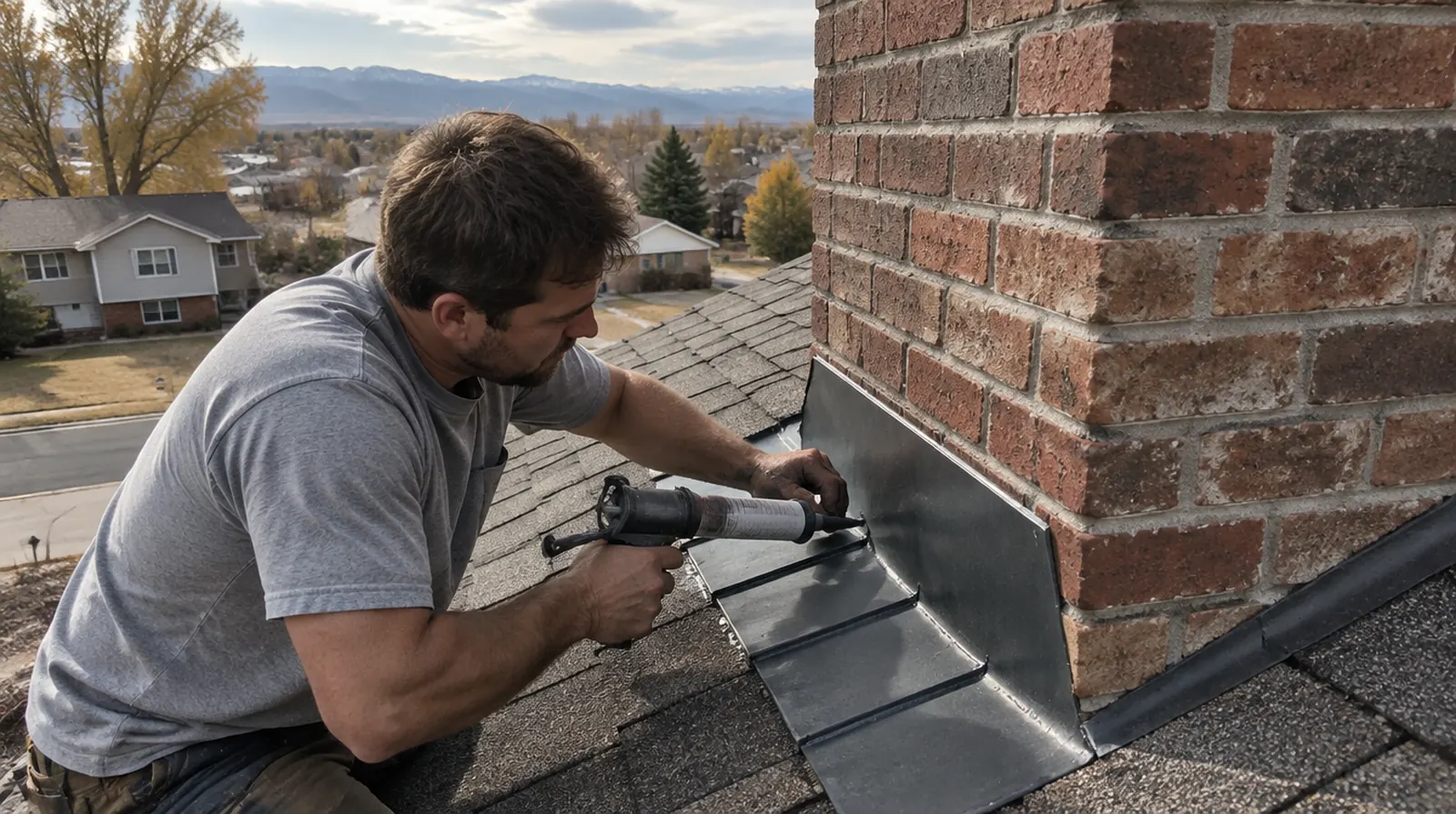
What roof leak repair involves
The stain on your ceiling is where water finally came through, not necessarily where it got in. Water lands on the roof, slips through an opening and then runs along the underlayment, deck or rafters before it drips onto the drywall. Our job is to follow that path back to the source. Common causes here include split rubber collars around plumbing vents, hail-cracked shingles and vents, wind-lifted shingles along ridges and rakes, and failed flashing where a roof meets a wall or chimney.
How we find and fix the leak
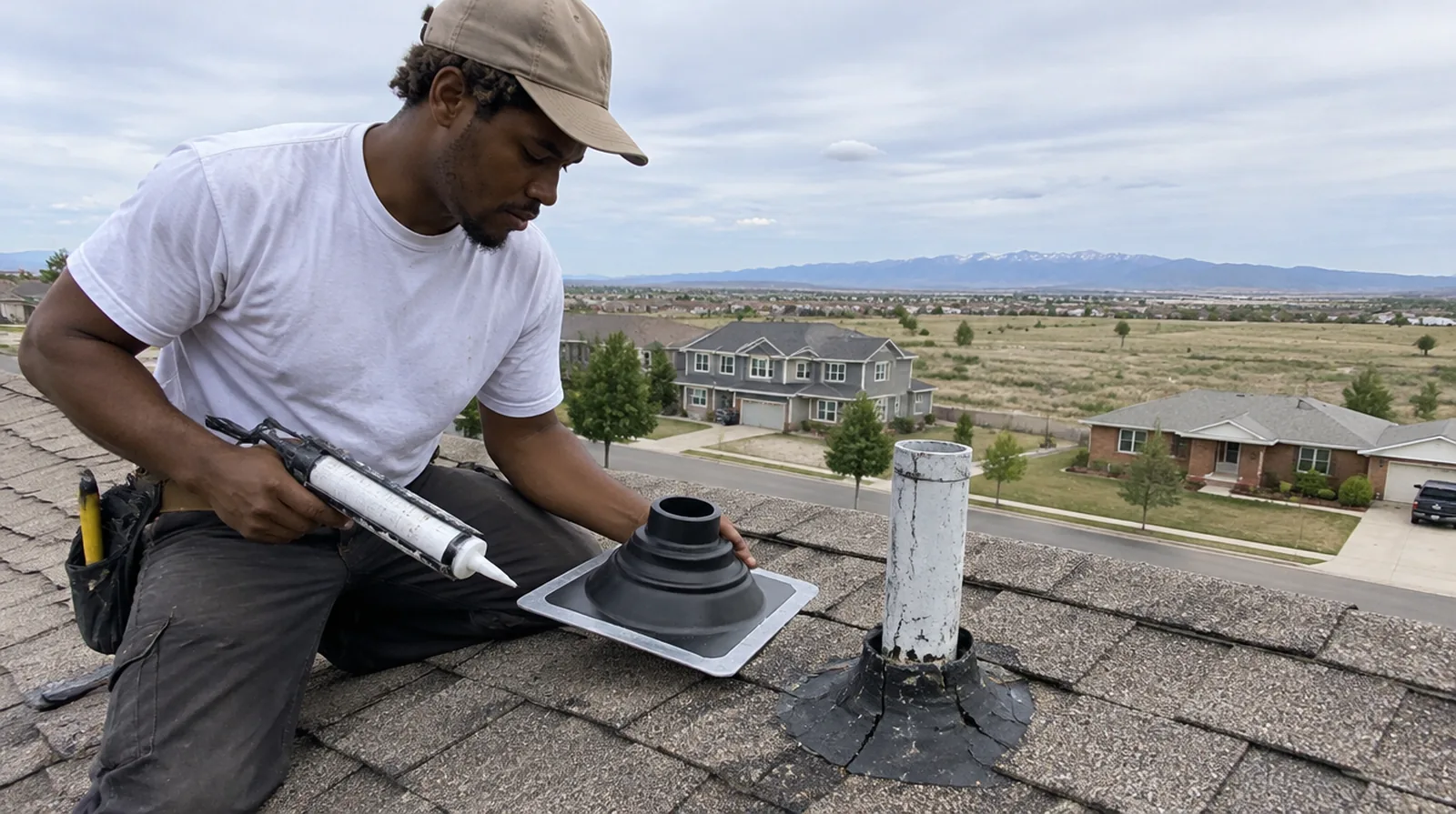
We begin inside by looking at the stain, asking when it appears and checking for patterns such as leaks only during wind from one direction or only during snowmelt. In the attic we trace water marks back up the slope. On the roof we inspect every opening along that line: vents, collars, flashing, valleys and any spot with hail or wind damage.
If the source is not obvious, we may water test sections of the roof one at a time while watching from the attic. Once found, we remove the damaged materials, replace failed collars, flashing or shingles, repair any soft deck and seal the area. You get photos of the problem and the repair.
When to call about a leak
- A stain on the ceiling or wall is growing.
- You see drips or hear water in the attic during storms.
- Paint is peeling or bubbling near a window, chimney or skylight.
- Insulation in the attic looks matted or damp.
Why leaks show up after dry stretches
Long dry periods hide small problems. Collars crack and shingles bruised by hail keep breaking down under the sun, but nothing leaks until the next big storm. Then a summer cloudburst or a heavy spring snow that melts fast pushes water into every weak point at once. Leaks that appear right after a hailstorm are a sign the damage went beyond surface granule loss.
What affects leak repair cost
- Finding the source. Some leaks are easy to spot; others need testing.
- What failed. A collar is quick; wall or chimney flashing takes longer.
- Deck and interior damage. Wet or rotted sheathing adds to the job.
- Access. Steep or high slopes take more setup.
Quick protection versus a permanent repair
When water is coming in during a storm, we can tarp or temporarily seal the area to protect your home. That is not the final fix. We return to repair the source properly once the weather clears. If leaks keep appearing in different places, broader roof repair or a replacement may make more sense than chasing one leak at a time.
Leaks after hail and insurance
If a leak shows up after a hailstorm, it may be part of an insurance claim. We document the source and damage with photos so you have a clear record for your adjuster. Many policies have deadlines for reporting storm damage, so it is best not to wait.
Condensation that looks like a leak
Not every attic stain comes from outside. In winter, warm moist air from the house can condense on the cold underside of the roof and drip down when the sun warms the deck. Bath fans venting into the attic make this worse. During a leak visit we check for these signs too, so you do not pay to fix a roof that is not actually leaking.
Roof leak repair FAQs
Can you find a leak that only happens in certain storms?
Usually, yes. Knowing when it leaks helps narrow it down, and water testing confirms it.
Do you fix chimney leaks?
Yes. We replace step and counter-flashing and tell you if the masonry needs attention.
Will insurance cover my leak?
It depends on the cause and your policy. We provide documentation to share.
How quickly can you come?
Call (720) 230-2809 and tell us if water is coming in.
Have an active roof leak?
Call (720) 230-2809 and tell us what you are seeing. We will set a time to trace it.