What a Commerce City roof inspection includes
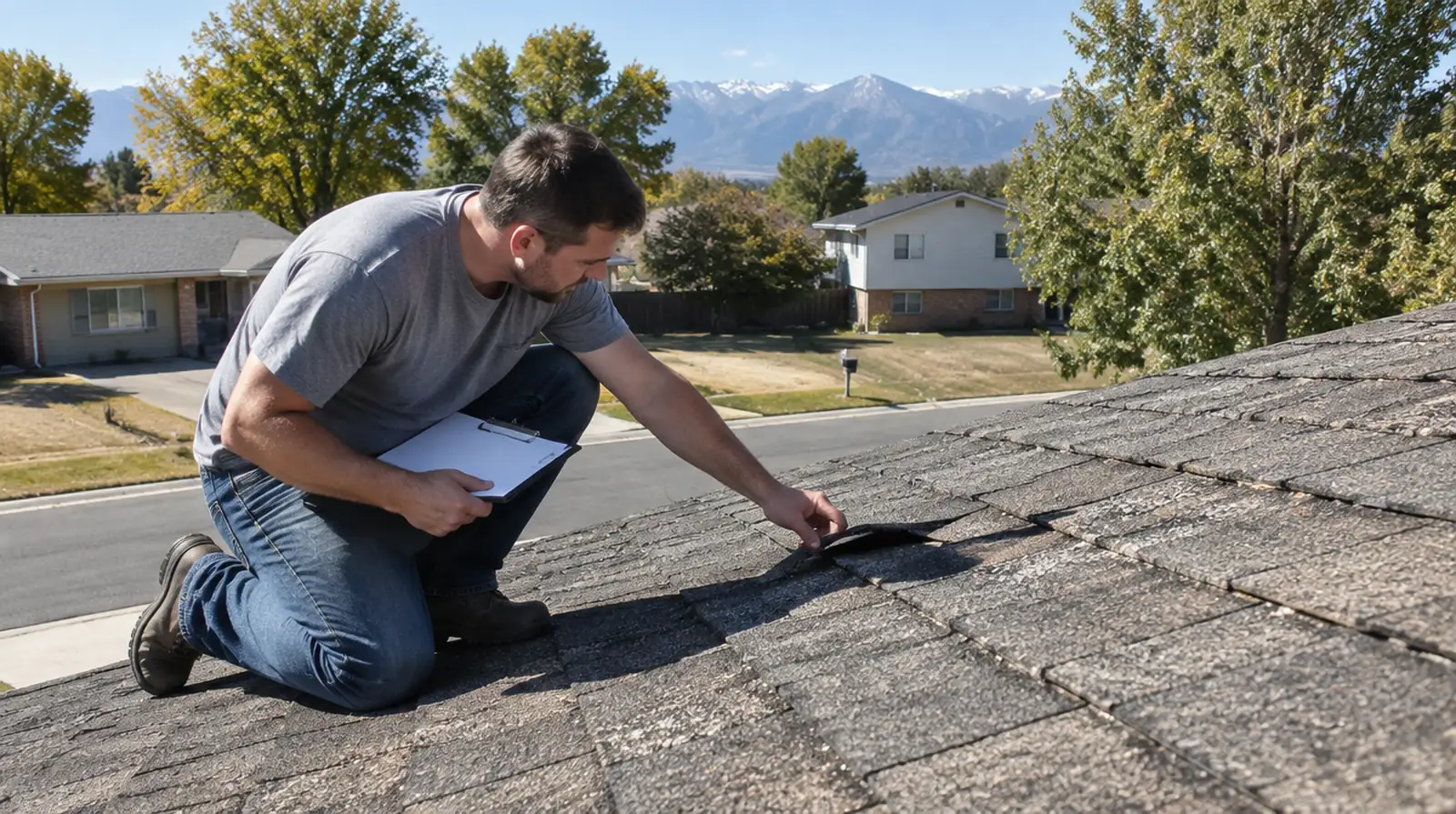
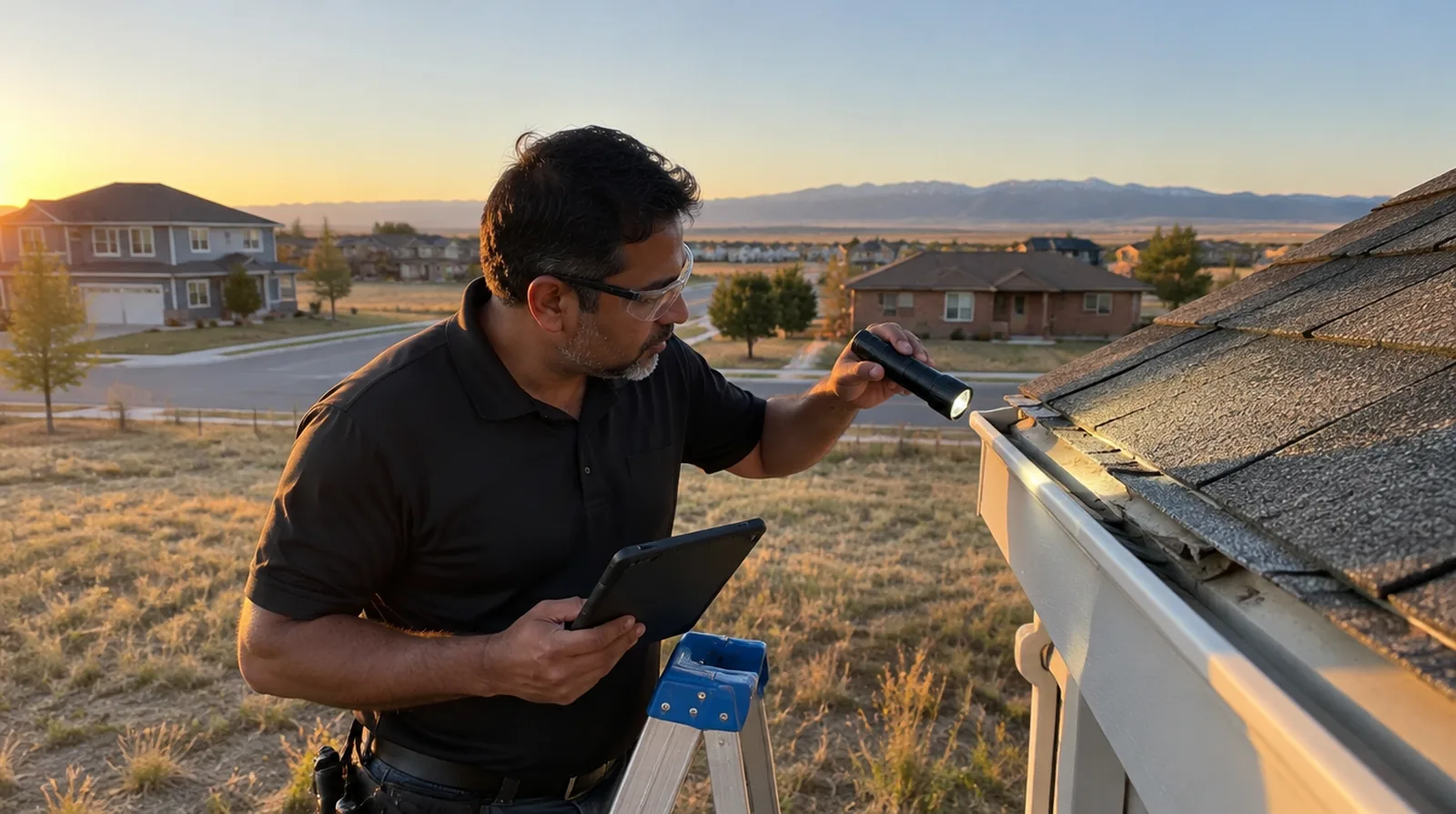
We start on the roof itself. Each slope is checked for hail hits, cracked or missing shingles, granule loss, lifted edges and exposed nails. We look at flashing along walls and around chimneys, the condition of roof vents and pipe collars, the valleys, and the drip edge along the eaves. Gutters and downspouts are checked for dents and loose sections, since hail and wind often leave marks there too.
Inside, with access to the attic, we look at the underside of the deck for stains, daylight or delamination, check insulation for moisture, and note whether intake and exhaust vents are working together. Those clues show how the roof is handling sun, heat and melting snow.
How we run a roof inspection
Set the purpose. A storm check focuses on new damage. A pre-sale inspection covers age, condition and any upcoming needs. A routine check looks for small issues before they grow. Telling us why you called helps us focus.
On the roof. We walk each slope, photograph damage and mark hail hits in a test square when needed. If a roof is too steep or fragile to walk, we use ladders and close-up cameras.
In the attic. We trace any stains and check ventilation and insulation.
Report. You get photos and plain notes on condition, likely remaining life and recommended work. Repairs are priced separately, and there is no obligation to hire us for them.
When to schedule an inspection
- Within a few weeks of a hailstorm that dented cars, gutters or outdoor furniture.
- After strong winds left shingle pieces in the yard.
- Before buying or listing a home.
- When a ceiling stain appears and you are not sure where it is coming from.
- Every few years on roofs more than ten to fifteen years old.
What we look for on Front Range roofs
Hail is the headline here, so we look for soft bruises, cracked mats and missing granules in a pattern across the slopes. Sun damage shows up as brittle, curled shingles on south and west faces. Wind damage appears as broken seal strips and creased tabs along the rakes and ridges. On older homes we often find two layers and dried-out flashing. On newer homes we pay close attention to valleys, sidewalls and roof vents.
What affects inspection scope and cost
- Roof size and pitch. Large or steep roofs take longer.
- Purpose. Insurance documentation and real estate inspections often require more detail.
- Attic access. Hard-to-reach attics take more time.
- Findings. Repairs are quoted separately.
Why an inspection beats guessing
Hail damage is easy to miss from the ground, and by the time it shows up as a leak, the deadline for an insurance claim may have passed. A careful inspection catches problems early, separates storm damage from normal wear and gives you a record of the roof's condition. For buyers and sellers it removes a big unknown from the deal.
Many policies set a time limit for reporting storm damage, so it is worth checking soon after a major storm rather than waiting for a leak.
Inspections for HOA and newer homes
In the newer communities on the north side, roofs are often similar in age because whole neighborhoods were built within a few years. When one house on the block needs a roof after a storm, neighbors often do too. An inspection helps you see whether your roof took the same damage and gives you documentation if your HOA requires it before exterior work.
Roof inspection FAQs
How long does an inspection take?
About an hour for most homes, including the attic.
Will you help with my insurance claim?
We provide photos and notes you can share with your adjuster.
Do I need to be home?
For attic access, yes. Exterior checks can be done while you are out.
How do I schedule?
Call (720) 230-2809 to book a time.
Want a clear read on the roof?
Call (720) 230-2809 to schedule a roof inspection in Commerce City.